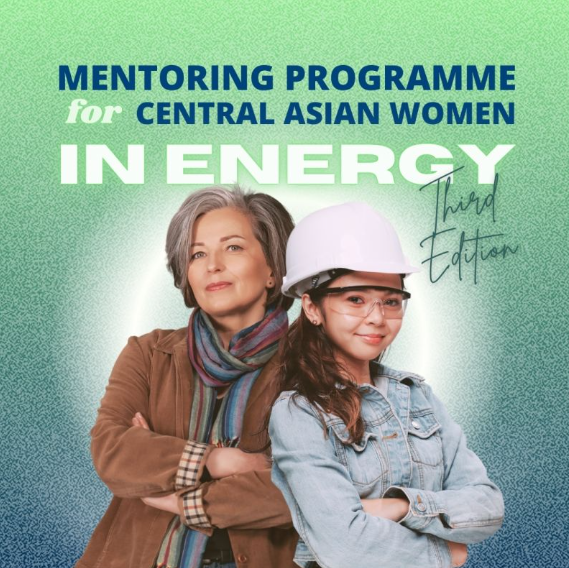
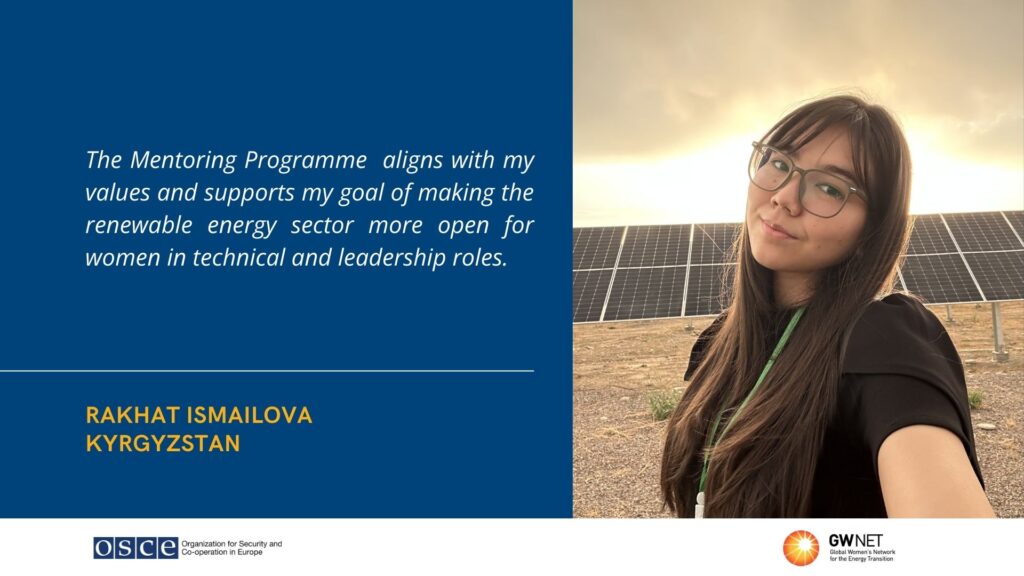
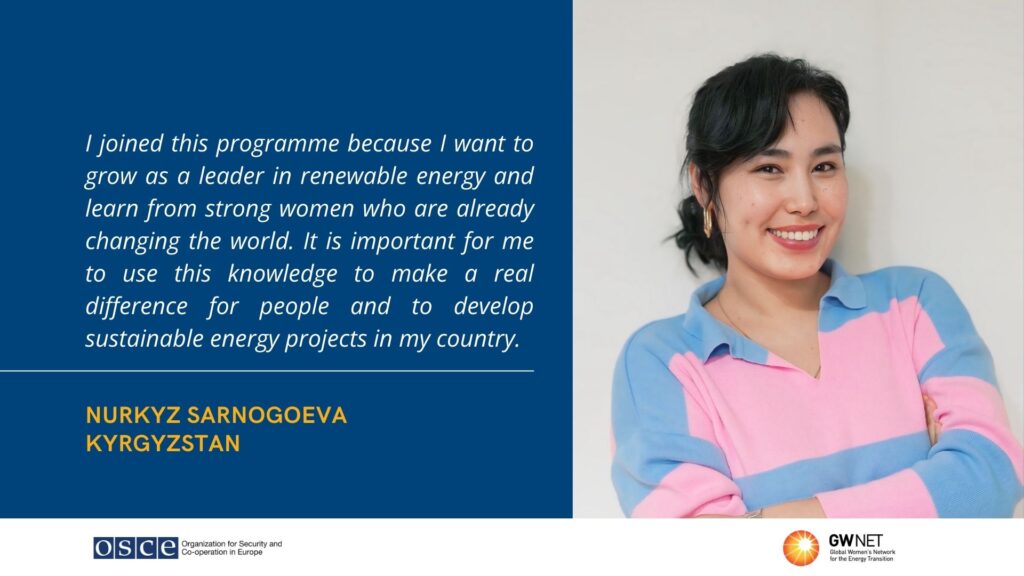
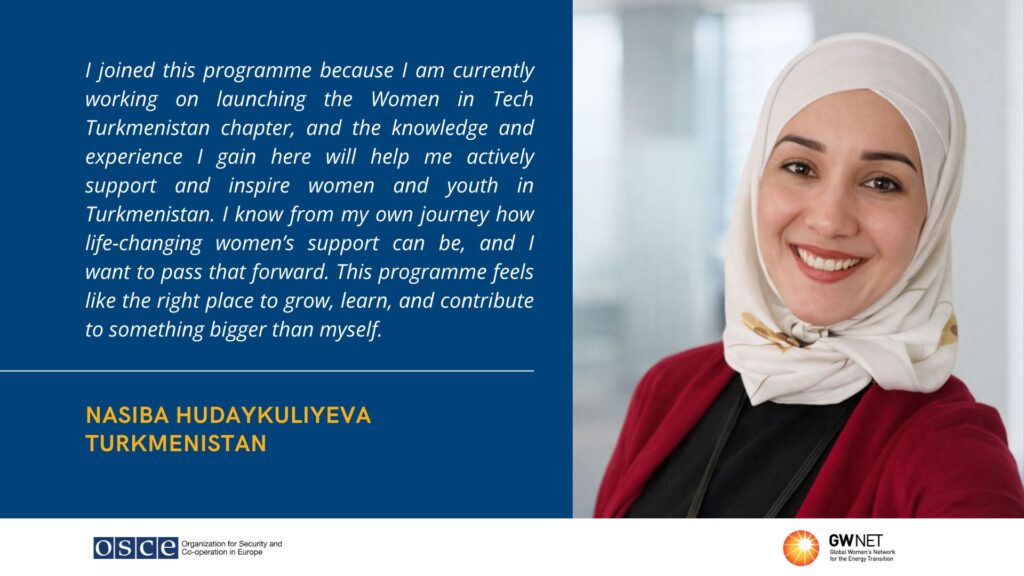
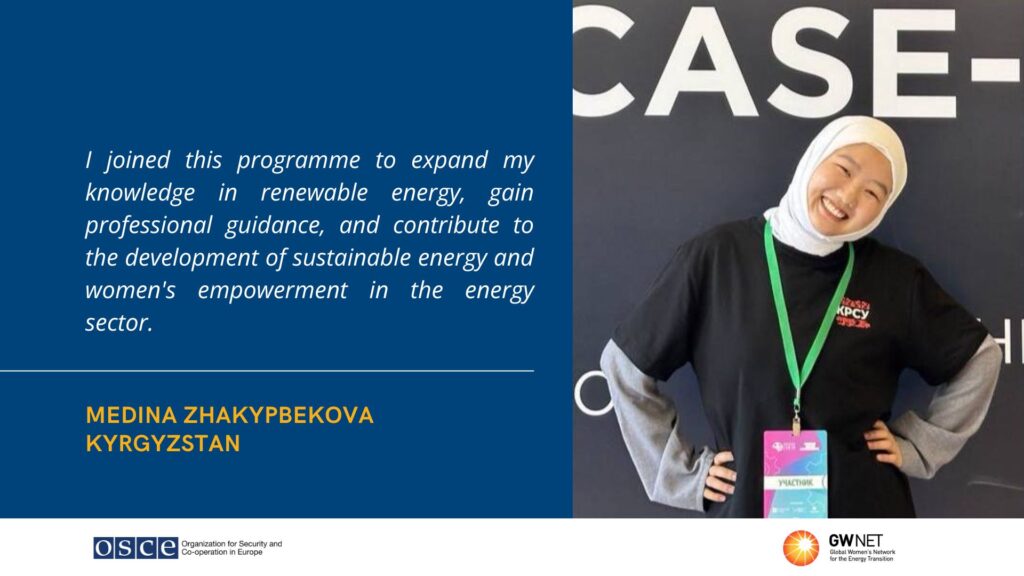
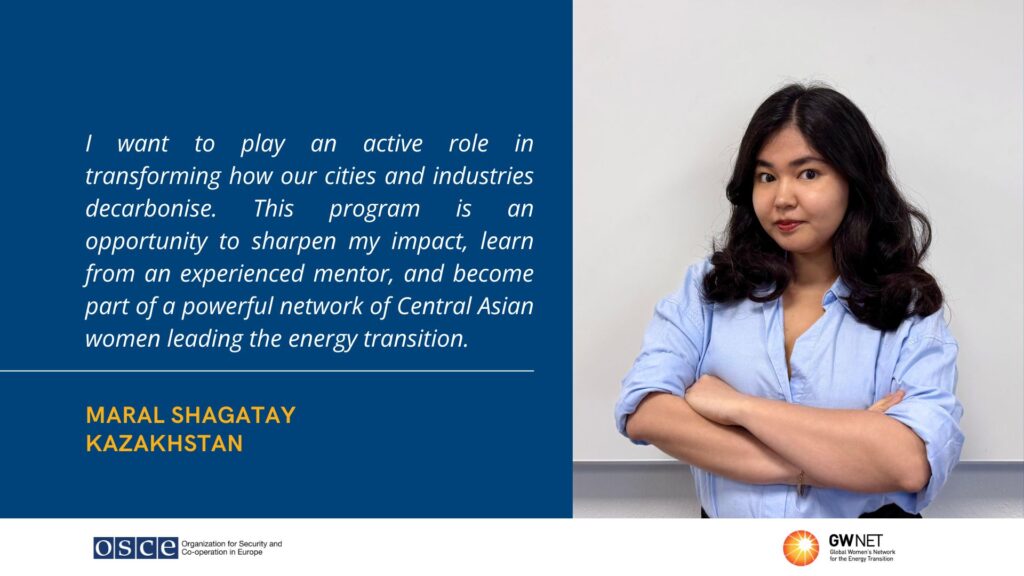
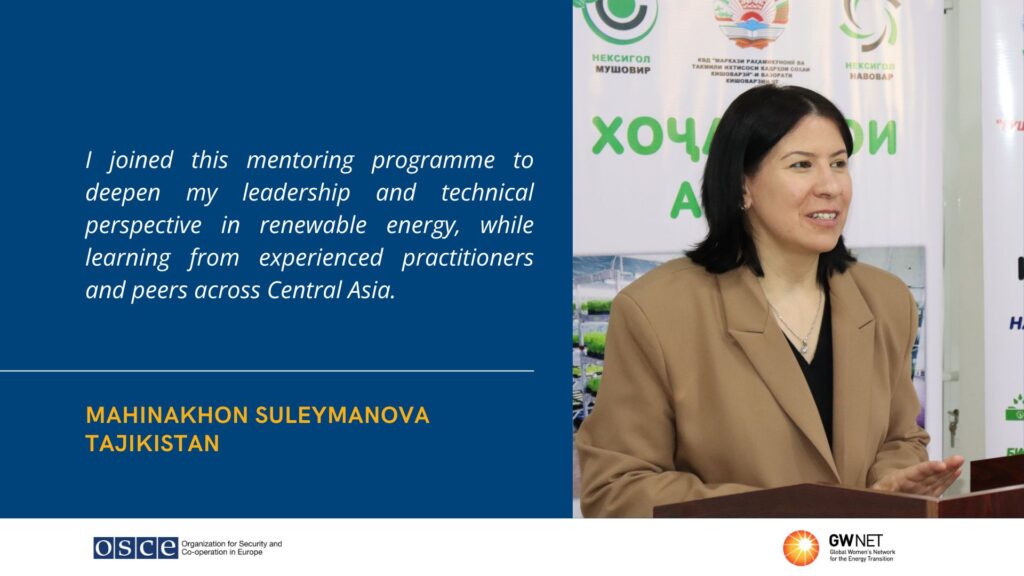
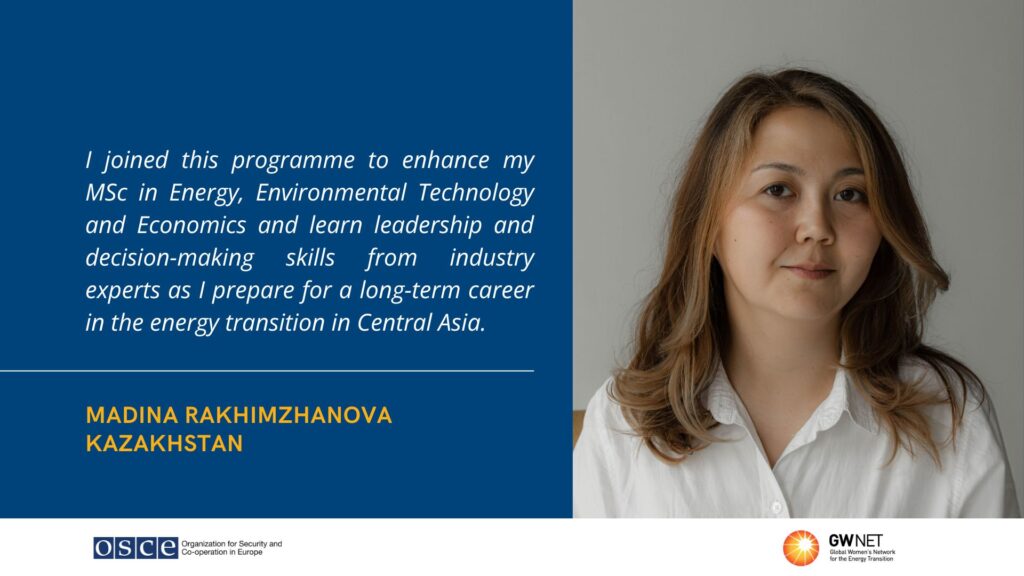
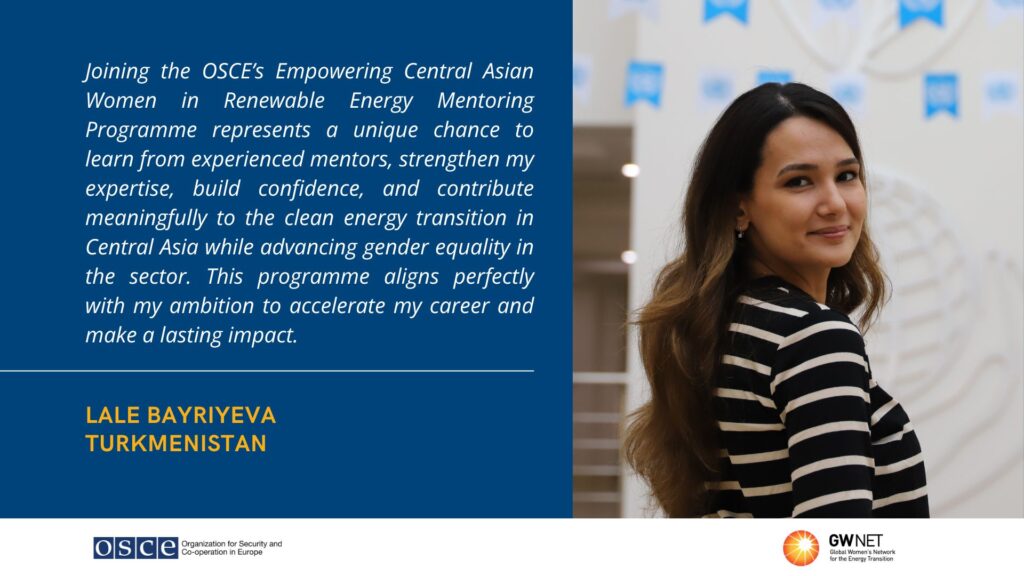
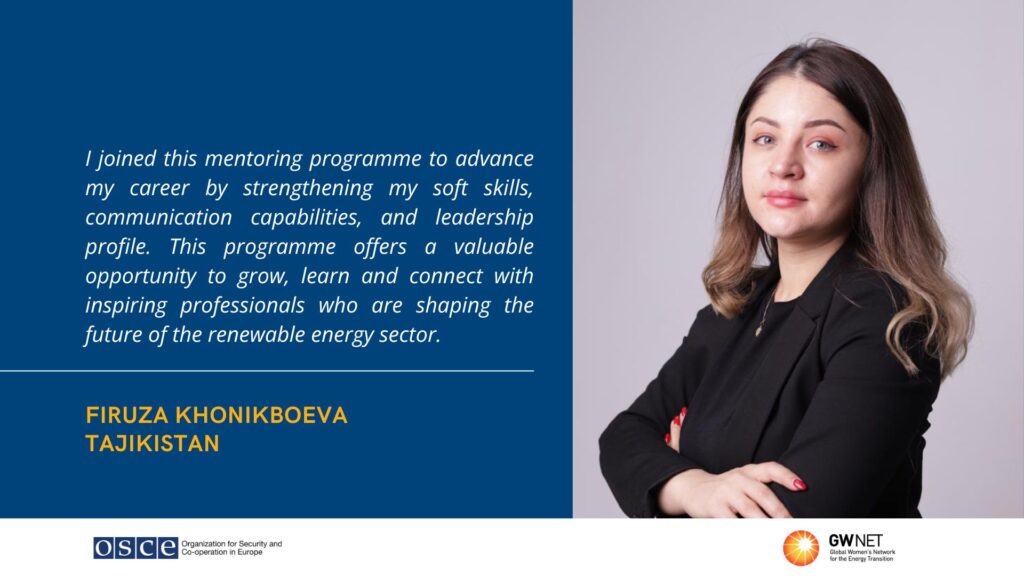
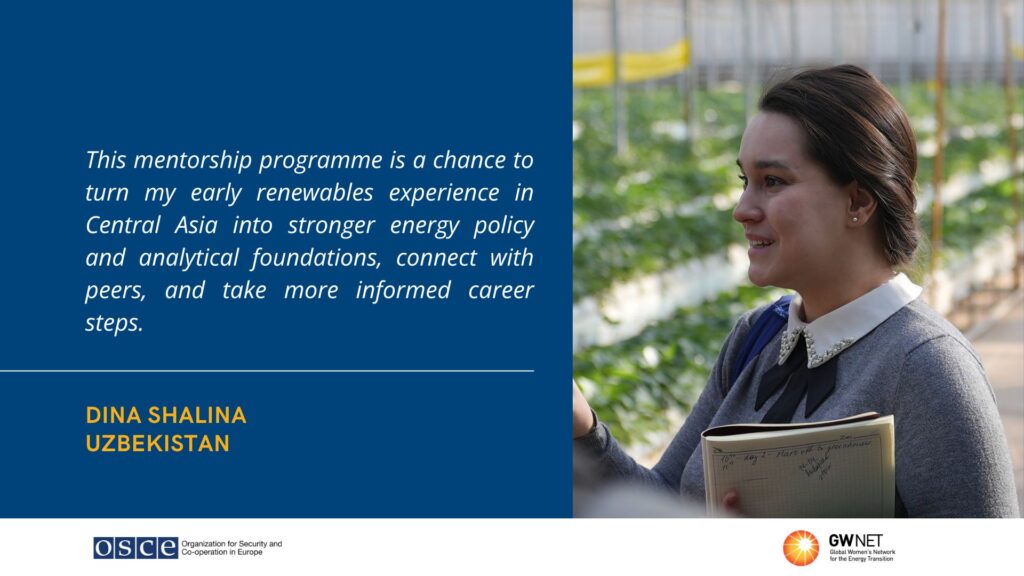
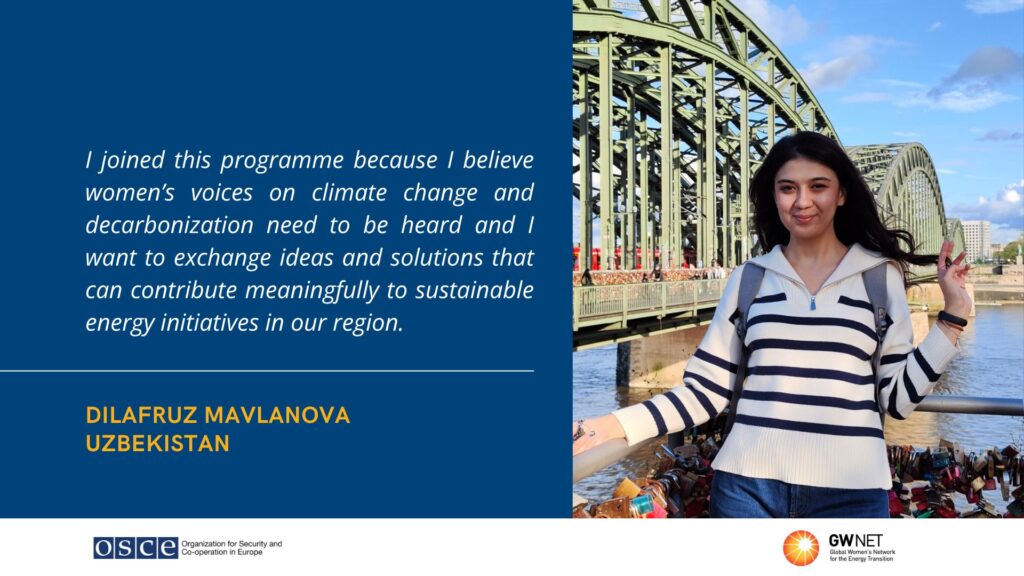
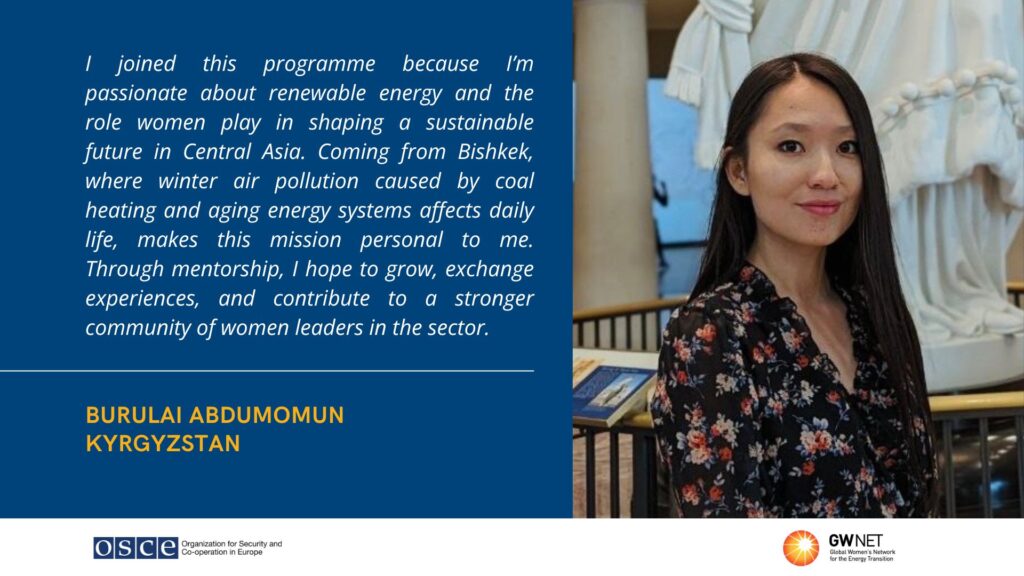
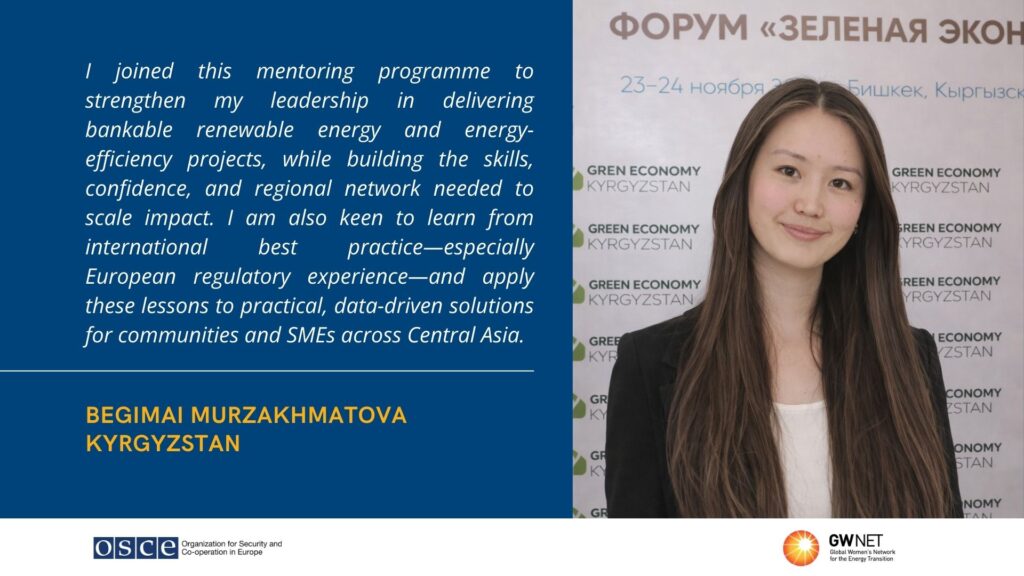
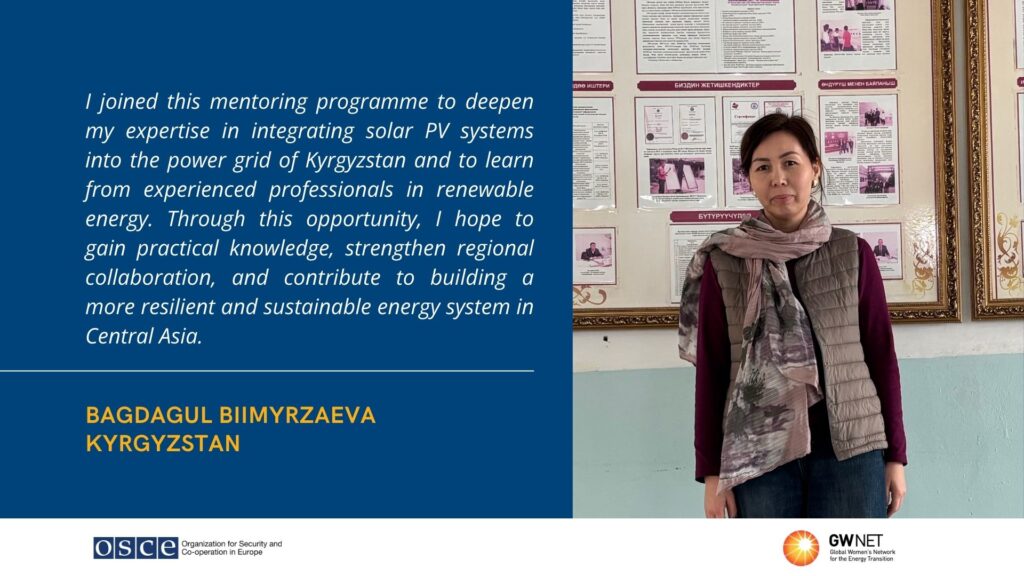
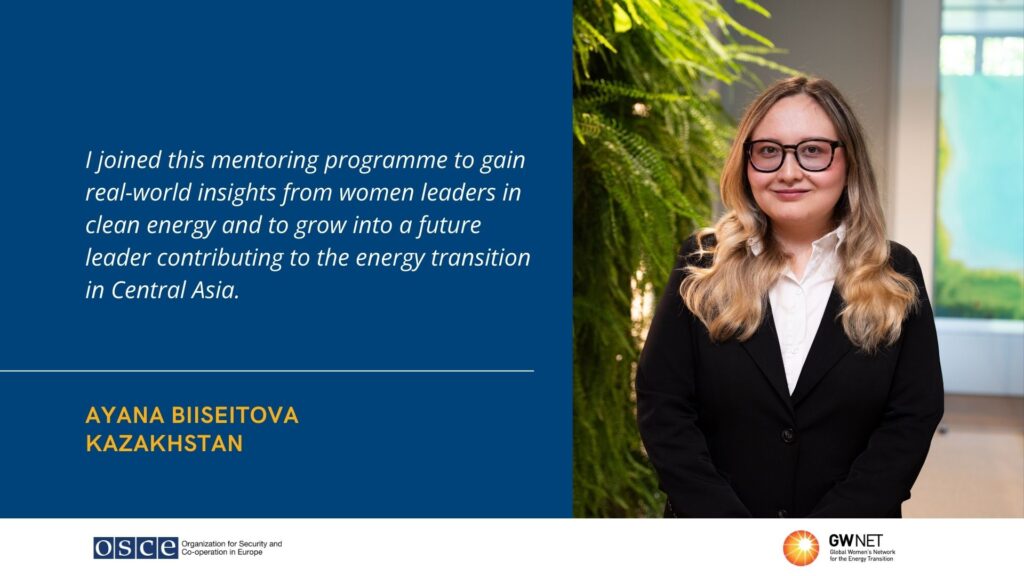
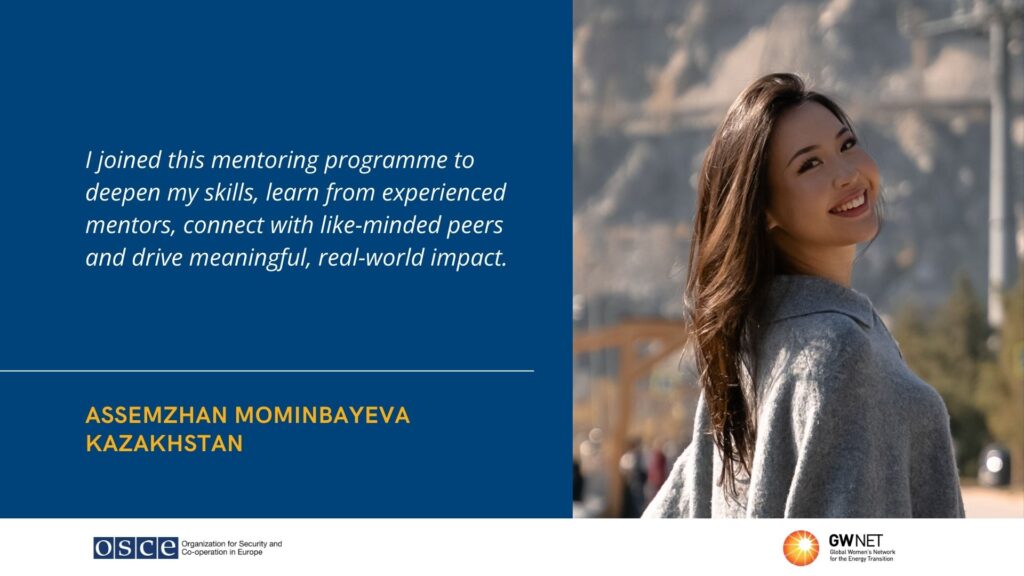
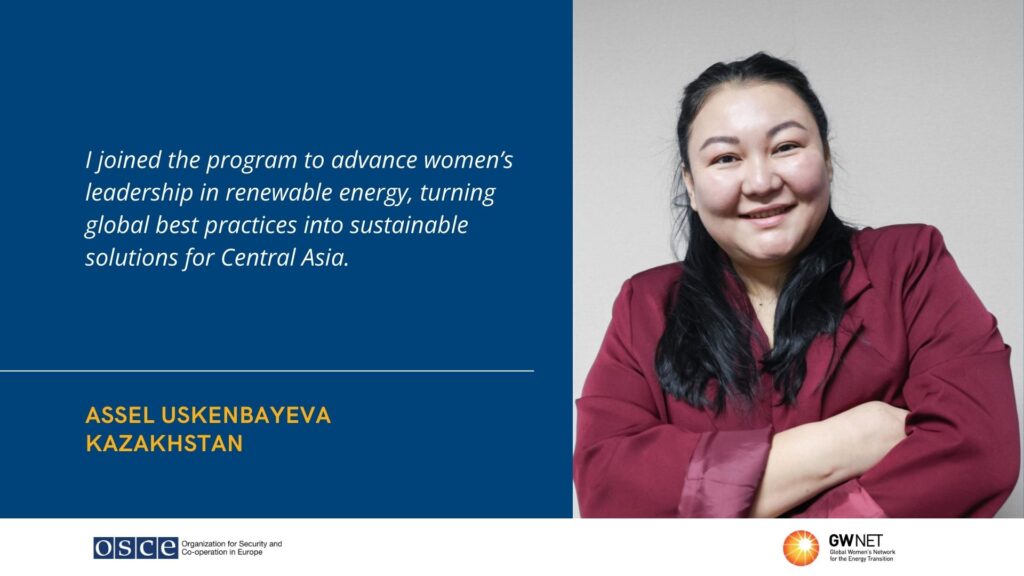
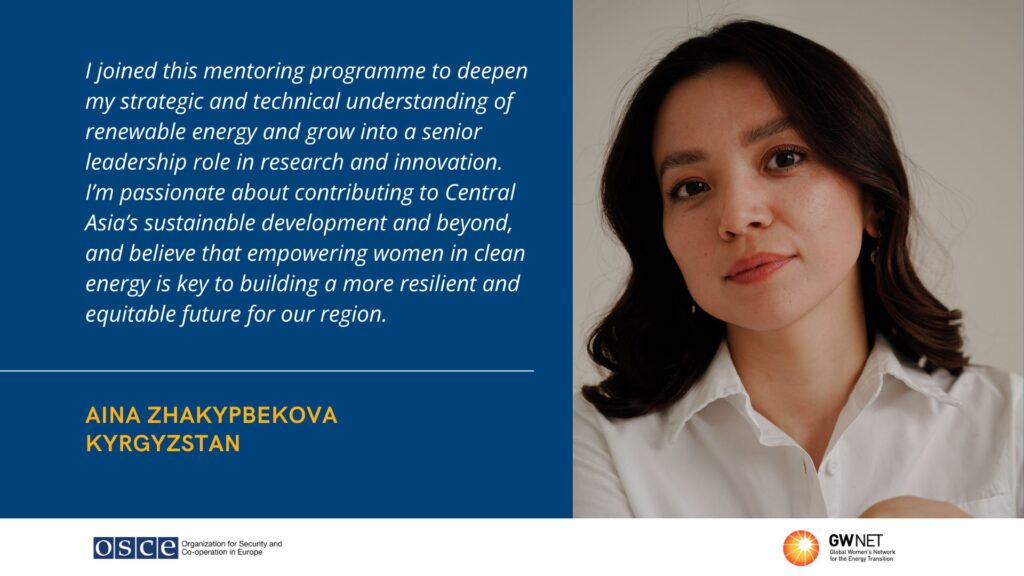
Women’s active participation and leadership are essential to achieving energy security and accelerating a just and inclusive energy transition. Yet, the energy sector remains one of the least gender-diverse industries, limiting innovation and growth. To address this imbalance and close the gender gap in the sector, GWNET, in partnership with the Organization for Security and Economic Co-operation in Europe, is launching the third edition of the mentoring programme for Central Asian women in Renewable Energy.
The programme will have a duration of 12 months and aims to:
- Increase women’s representation at the managerial and decision-making levels;
- Strengthen leadership and soft skills, including self-confidence, strategic communication, and professional visibility;
- Support participants to develop concrete career goals;
- Encourage networking and peer-to-peer exchange to expand access to opportunities across the sector.
In addition to one-to-one support from mentors, selected mentees will benefit from:
- Knowledge-transfer components (including thematic sessions on the energy transition and professional development);
- Networking and peer-to-peer exchange within a regional cohort; and
- A study tour to Vienna, subject to arrangements
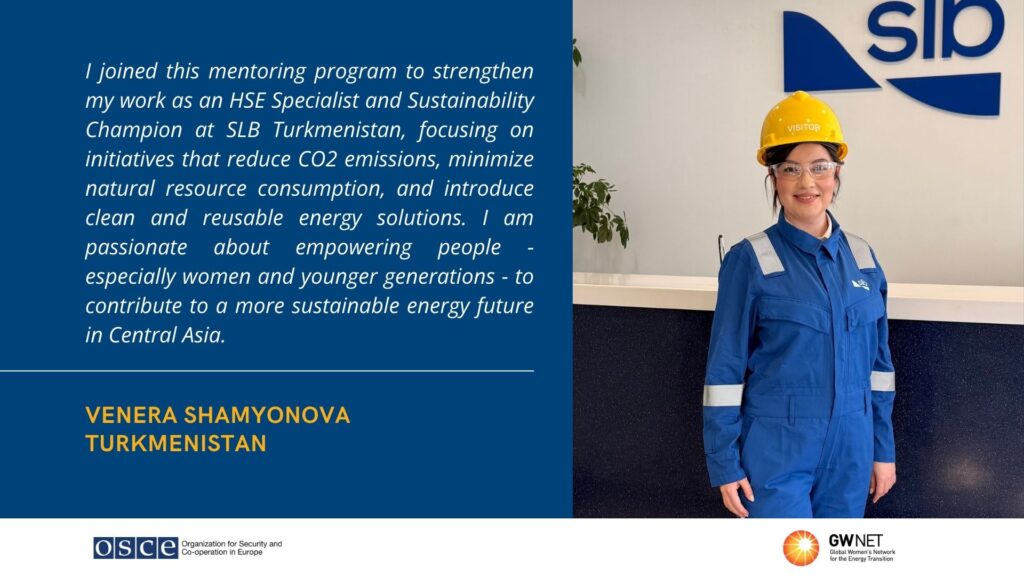
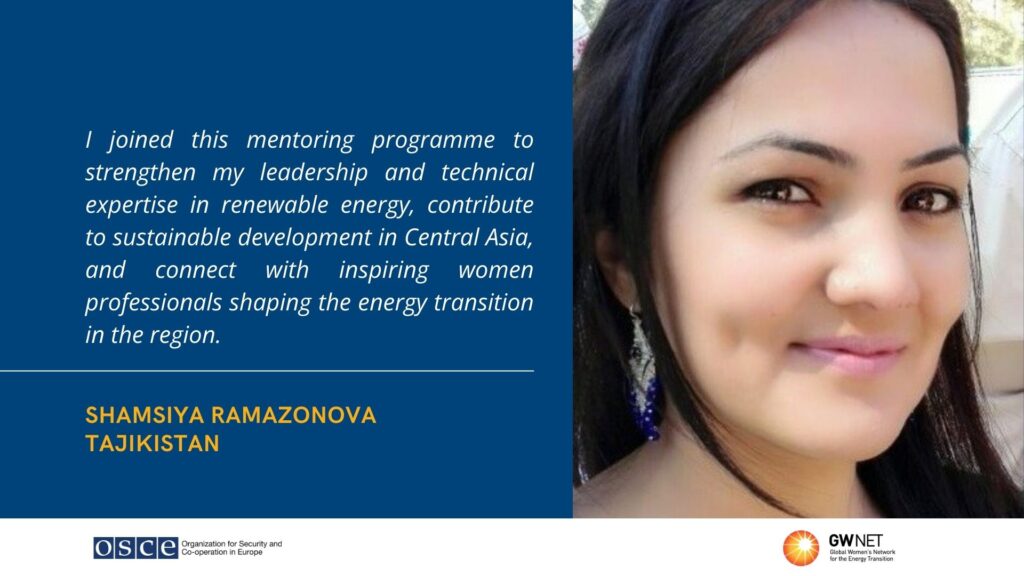
The mentees in this programme are Central Asian women with 2–8 years of experience in the energy sector, who are keen to contributing to the energy transition in their country and across the region. Women living and/or working in rural and remote areas were particularly encouraged to apply.
This activity is implemented within the framework of the OSCE project on Promoting Women’s Economic Empowerment in the Energy Sector in Central Asia and follows two successful editions of the mentoring programme. Find out more here.
About OSCE: The Organization for Security and Co-operation in Europe (OSCE) has a comprehensive approach to security that encompasses politico-military, economic and environmental, and human aspects. It therefore addresses a wide range of security-related concerns, including arms control, confidence- and security-building measures, human rights, national minorities, democratization, policing strategies, counter-terrorism and economic and environmental activities. All 57 participating States enjoy equal status, and decisions are taken by consensus on a politically, but not legally binding basis. Learn more: Organization for Security and Co-operation in Europe | OSCE